The Power of Water: Why Life Feels Better at Sea
Thursday, 7 May 2026

There's something undeniably soothing about the sea. Whether it’s the rhythmic crashing of waves, the salty breeze, or the vast, endless horizon, being near the ocean seems to melt away stress and bring a profound sense of peace. For centuries, people have turned to the sea for relaxation, inspiration and healing. But what is it about the ocean that has such a powerful impact on our wellbeing? Science, psychology and human experience all point to one answer: the sea speaks to something deep within us.
The late marine biologist Dr Wallace J Nichols, author of Blue Mind, explains that being near water induces a meditative state, which he calls the “blue mind effect”. He describes it as “a mildly meditative state characterised by calm, peacefulness, unity, and a sense of general happiness and satisfaction with life”. According to Dr Nichols, our brains respond positively to water because it provides a break from the overstimulation of modern life. The simple yet dynamic environment of the ocean – waves rolling in and out, water sparkling under the sun – engages our senses in a way that is both stimulating and calming. Psychologists also point to the role of negative ions in ocean air. Negative ions are molecules that, when inhaled, can increase serotonin levels, helping to reduce stress, enhance mood, and improve sleep.
WHY THE SEA SOOTHES THE MIND
Dr Michael Merzenich, a neuroscientist and pioneer in brain plasticity research, suggests that natural environments rich in negative ions, such as the sea, “allow the brain to reset and restore itself in ways that urban environments do not”. Water has long been associated with healing. Ancient civilisations, from the Greeks to the Romans, believed in the curative properties of mineral-rich seawater, giving rise to the practice of thalassotherapy. Today, spa treatments featuring seawater, seaweed, and marine minerals remain popular, offering relaxation and rejuvenation.
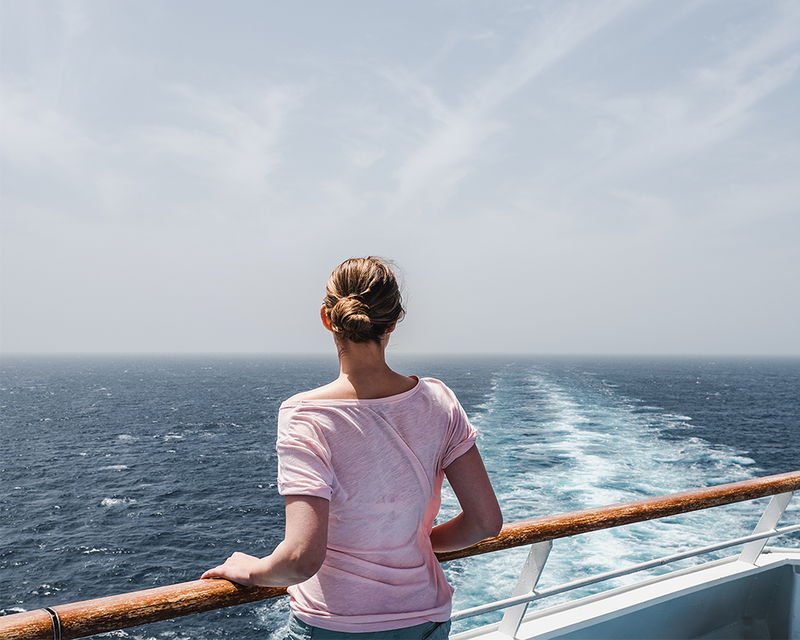
But beyond physical treatments, the ocean offers something deeper: psychological restoration. Dr Richard Shuster, clinical psychologist and host of The Daily Helping podcast, has said: “Staring at the ocean actually changes our brain waves’ frequency and puts us into a mild meditative state.” This is one reason why people often report feeling more creative, reflective, or even spiritually connected when gazing at the sea. Most can agree the sound of waves is one of the most soothing sounds in nature. Unlike sudden, sharp noises that trigger the brain’s stress response, the rhythmic nature of ocean waves creates a predictable and consistent pattern, which the brain finds reassuring.
Read more: How to plan a stress-free cruise
Our first cruise, brilliant experience
Our first cruise, so we were a bit unsure of what to expect but wow, what a brilliant experience. From the car park, through embarkation the process was smooth. The cabin was immaculate and comfortable. The food and service was second to none. Great shows in the theatre, and entertainment in the various bars. Lovely space to relax round the pools and spa on sea days. Easy to get off and on the ship in port. The only negative of the whole trip was the configuration of the bathroom makes the loo tight to use.
Five stars from start to finish ️
– Verified Guest Review, Trustpilot
THE SEA’S GENTLE RHYTHMS
Studies show that these sounds help lower cortisol (the stress hormone) and promote deep relaxation. Dr Sally Augustin, an environmental psychologist specialising in the impact of surroundings on mental wellbeing, notes that “the steady, repetitive nature of waves mimics some of the most calming rhythms in our own physiology, such as our heartbeat and breathing”. This synchronisation helps us slip into a state of deep relaxation, making the ocean a natural antidote to stress. Beyond its scientific benefits, the ocean also holds an almost spiritual allure. The vastness of the sea, stretching infinitely toward the horizon, can make our daily worries feel small in comparison. There’s a sense of awe that comes with staring at the endless blue – an experience that psychologists refer to as “the overview effect”, a term originally coined to describe the cognitive shift astronauts experience when viewing Earth from space.
Dr Paul Piff, a social psychologist at the University of California, Irvine, has studied how awe-inspiring experiences impact human emotions. His research suggests that feeling small in the face of something vast, such as the ocean, leads to increased feelings of gratitude, generosity, and interconnectedness. “Awe makes us feel more attuned to the bigger picture,” Dr Piff explains, “and helps us shift our focus away from ourselves and our problems”. For those who spend extended time at sea – whether on a cruise, a yacht, or a simple sailboat – the calming effect of the ocean becomes even more pronounced. Unlike a quick trip to the beach, where distractions remain, cruising allows for full immersion in the marine environment. The gentle rocking of the ship, the uninterrupted horizon, and the deep, star-filled skies at night all contribute to a profound sense of relaxation and wonder.
HOW THE SEA AFFECTS DAILY LIFE
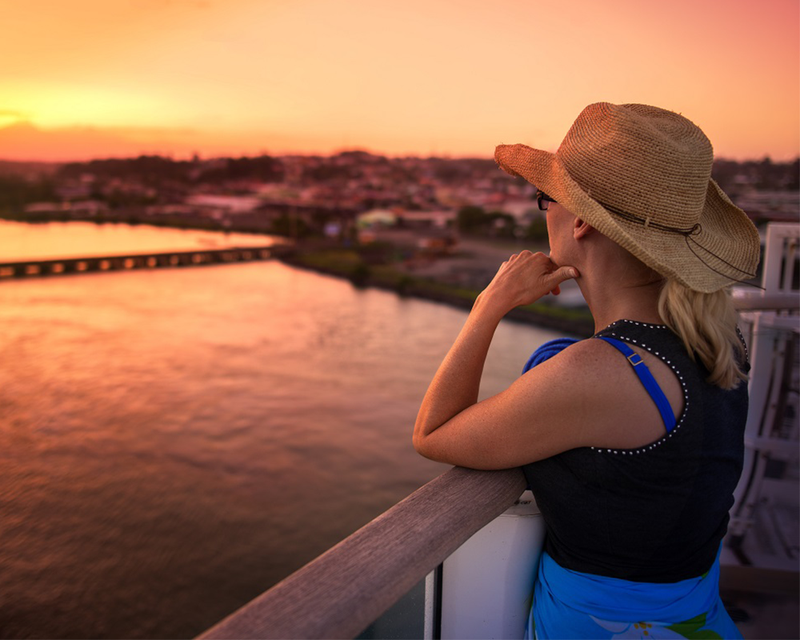
Cruisers often report feeling more in tune with nature and themselves while at sea. The routine of ocean travel – watching the sun rise over the water, feeling the sea breeze, listening to the sounds of waves creates a rhythm that naturally slows the mind and body. This experience, free from the demands of daily life, fosters deep relaxation, reflection, and even personal transformation. Not everyone has the luxury of living by the ocean, but that doesn’t mean we can’t bring its calming influence into our daily lives.
Studies suggest that simply looking at images or videos of the sea can induce relaxation. Sound machines or meditation apps featuring ocean waves can mimic the therapeutic effect of being near water. Even incorporating shades of blue into home decor can have a subtle yet positive impact on mood. Dr Nichols encourages people to seek out water in any form, whether it’s a lake, river, or even a backyard pool. “The more we can integrate water into our lives,” he says, “the more we can tap into the psychological and physiological benefits it offers.”
Read more: Wellness at Sea: Jenny Powell’s Guide to Feeling Your Best on an Ambassador Cruise
FINAL THOUGHTS
The sea has captivated humans for centuries, offering solace, inspiration and healing. Whether it’s the science of negative ions, the soothing rhythm of waves, or the sheer vastness that puts life into perspective, the ocean has an undeniable ability to calm the mind and nourish the soul. For cruisers, this effect is amplified – life at sea provides the rare opportunity to fully embrace the ocean’s therapeutic power, leaving behind stress and stepping into a world where time slows, thoughts clear, and wellbeing flourishes. As Dr Nichols beautifully puts it: “Water is medicine. It has the power to heal, to calm, and to transform us.”
Why Cruise with Ambassador
With Ambassador, you can enjoy the calming experience of life at sea for yourself, sailing from UK ports with welcoming service, smaller comfortable ships and range of itineraries designed to help you explore more and truly relax.