6,766 Moments of Wonder: ORCA Marine Wildlife Sightings From Ambassador Vessels in 2025
Thursday, 15 January 2026
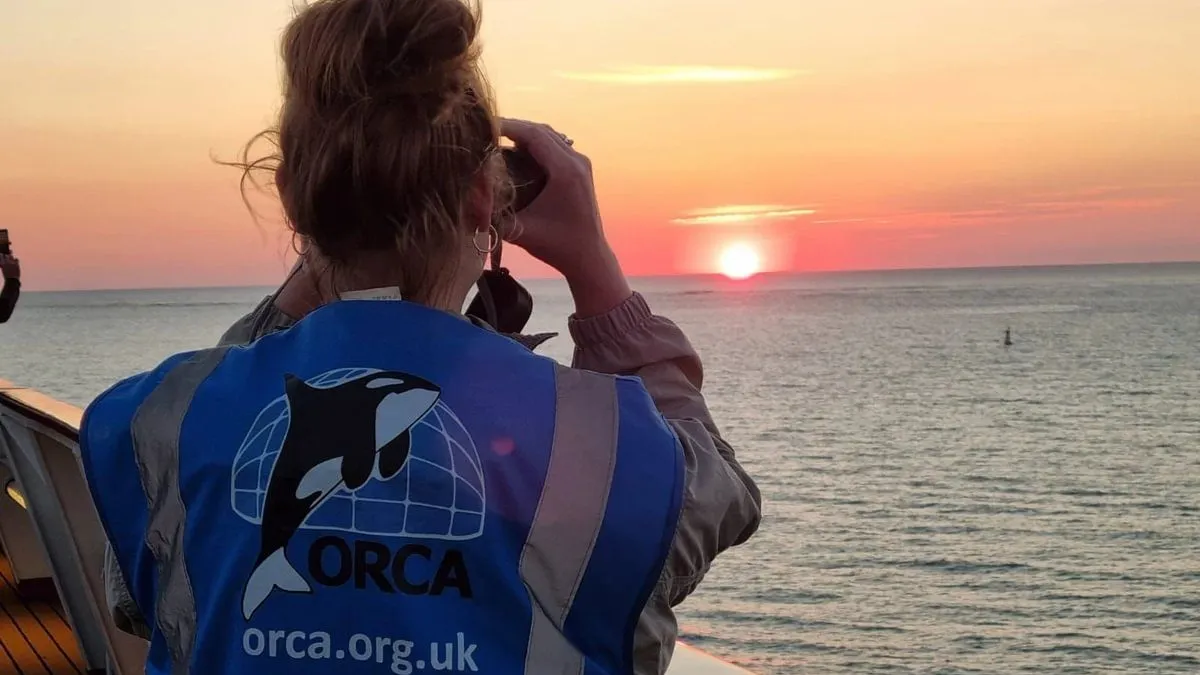
Our 2025 ORCA sightings map tells a joyful story: guests and ORCA volunteers recorded 6,766 animals across our voyages, with stand-out encounters that included orca, humpback and sperm whales, plus the rarely seen beaked whales. The data spans our classic no-fly routes around the British Isles, Norwegian fjords and down to Iberia and the Canaries, showing just how lively these waters can be when you’re on the right ship with expert spotters on deck.
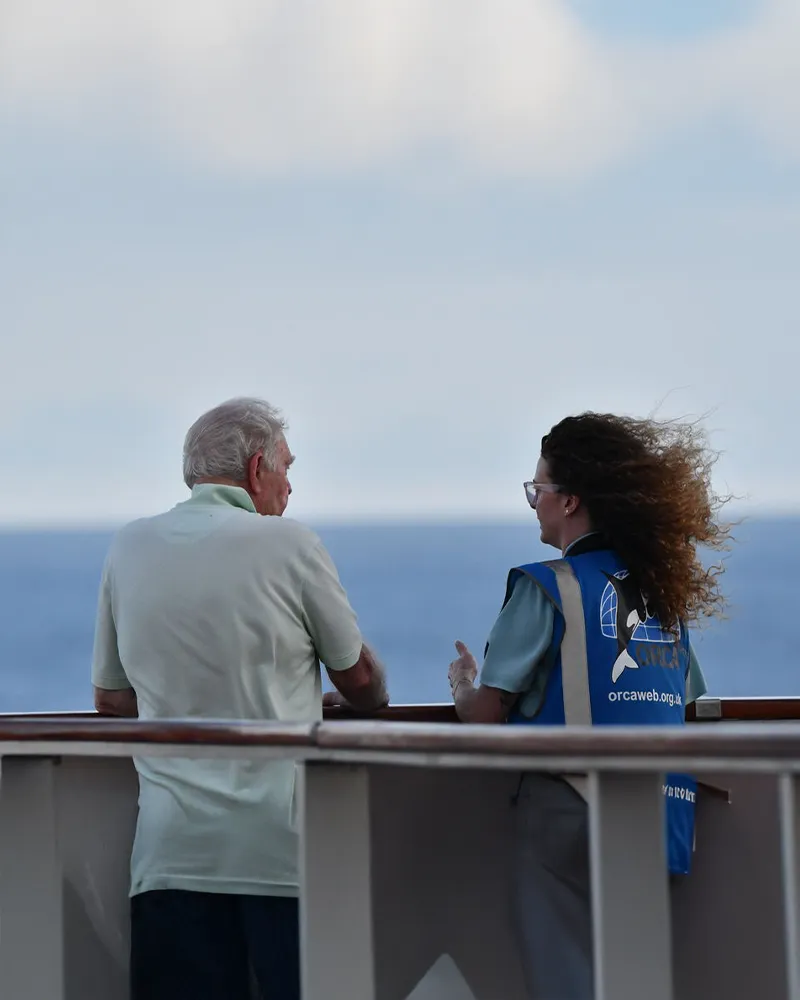
Ambassador’s partnership with ORCA brings trained wildlife guides on board, along with talks, workshops and deck watches that help you make the most of every sighting. On select sailings you’ll also find special events like our ORCA-supported CEO Cruise with lectures, Q&As and conservation activities that guests love.
Highlights from the 2025 map
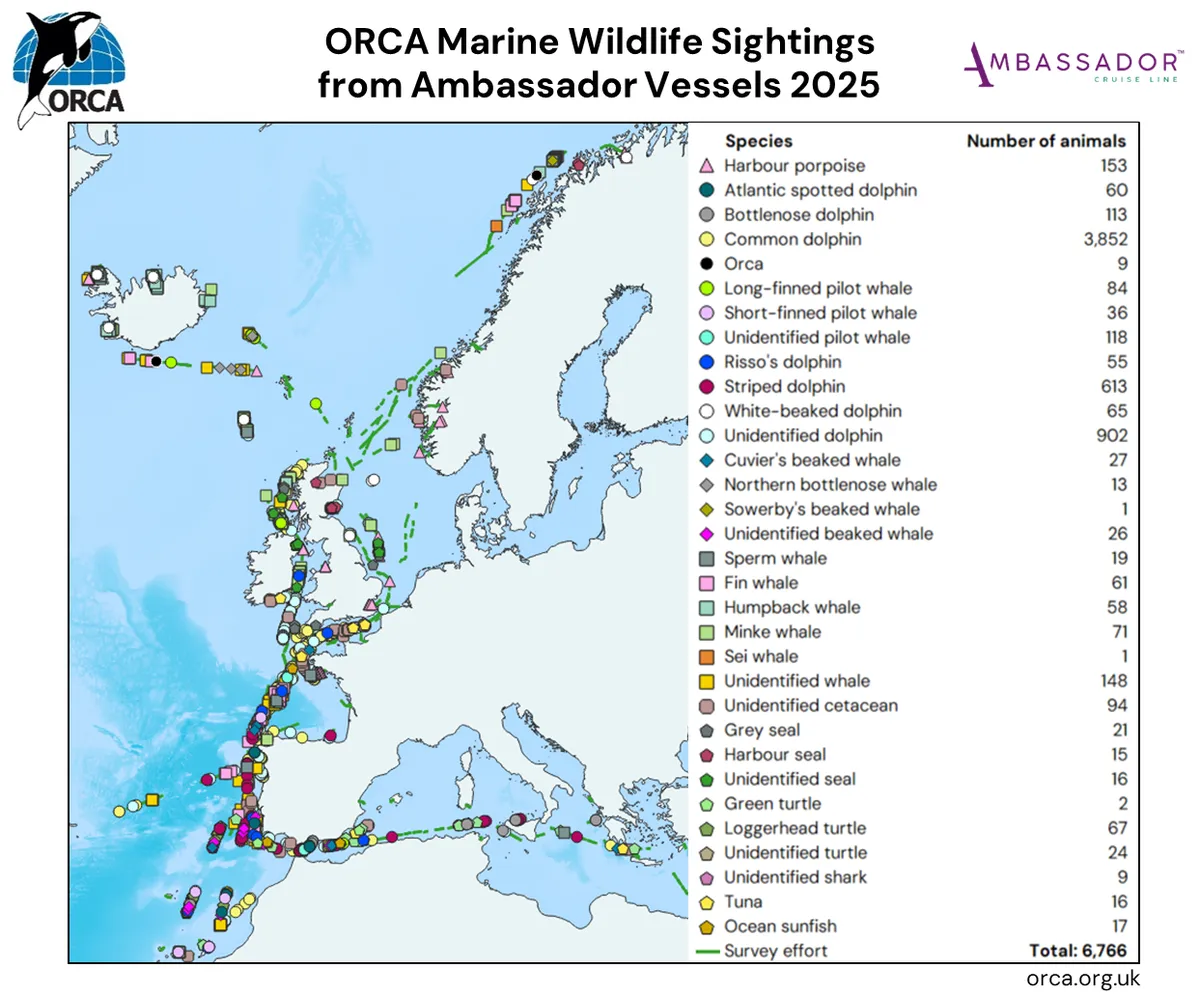
- Dolphin days: Hundreds of sightings along the Bay of Biscay, Iberia and Atlantic approaches, with common dolphins by far the most frequently recorded.
- Big-whale moments: Repeated encounters with humpbacks and sperm whales on longer Atlantic stretches.
- Elusive wonders: Confirmed sightings of Cuvier’s, Sowerby’s and unidentified beaked whales. If you’ve always dreamt of seeing these deep-divers, our ORCA sailings give you the best chance from a comfortable observation point on deck.
- Orca in Europe: Not just a bucket-list moment in the Pacific. The map shows orca right here on European itineraries, particularly around the northeast Atlantic.
Where our guests are spotting wildlife
Norwegian Fjords and Arctic routes
Scenery that takes your breath away, plus a strong chance of whales, porpoises and seabirds. Our smaller ships glide quietly through fjords, giving you long, calm viewing windows from sheltered decks.
British Isles & Bay of Biscay
A hotspot for dolphins, minke whales and seabirds. Biscay’s deep canyons are famous for beaked whales and other pelagic species, which is why our ORCA teams spend extra time here.
Iberia, Canaries & Atlantic Islands
Warm-water species like striped dolphins, pilot whales and the occasional loggerhead turtle turn up on passage days, and the viewing is often relaxed in gentle seas.
What makes wildlife watching with Ambassador different
- Smaller to mid-sized ships with open deck space and a friendly crew, ideal for unhurried wildlife viewing and expert talks.
- Onboard ORCA programmes with lectures, workshops and guided watches that turn sightings into understanding.
- An adult-focussed atmosphere designed for comfort, calm and conversation with like-minded travellers.

When to go for the best chance of sightings
- Spring to early summer: Lively seas in the Bay of Biscay and Northern Europe, with dolphins and migrating whales.
- Summer into early autumn: Norwegian Fjords and Arctic routes shine with long daylight hours for deck watches.
- Winter sun season: Sail south for gentler seas around Iberia and the Canaries with regular dolphins and pilot whales.
How to get more from your wildlife days at sea
- Join the deck watches. ORCA teams will point out blows, splashes and seabird rafts you might miss.
- Bring binoculars (7x–10x) and a simple field guide or use ORCA’s ID sheets.
- Dress for the breeze. Even on sunny days the wind can be cool.
- Be patient. Some of our most memorable sightings have come after a quiet hour on deck.
FAQs (based on what people ask before they book)
- Will I really see whales or dolphins on a cruise from the UK?
Yes, very often. Our 2025 map shows thousands of animals recorded on regular itineraries close to home, thanks to time on open water and ORCA expertise. Sightings are never guaranteed, but the odds are good on routes across Biscay, around the British Isles and up to Norway. - Is a smaller ship better for wildlife watching?
Many guests find it easier to spot and move around on a smaller ship, with lower railings, good sightlines and less crowding on the rails. That’s one reason our adult-focussed, mid-sized ships are popular with wildlife lovers. - Are there talks and activities about marine life on board?
Yes. Expect ORCA lectures, practical ID sessions and hosted deck watches on selected sailings, plus special event voyages like the CEO Cruise in support of marine conservation. - Do I need to fly for the best wildlife?
Not at all. Our brand was built around no-fly convenience from UK ports and many of our richest sightings happen on those classic sailings.
Why cruise with Ambassador
We’re Britain’s authentic no-fly cruise line, offering affordable quality and the warmest welcome at sea on smaller, friendly ships. Explore breathtaking destinations with expert partners like ORCA and enjoy an atmosphere that suits thoughtful, experience-seeking travellers.
Sources: ORCA x Ambassador 2025 sightings map; Ambassador brand guidelines and positioning; BBC Wildlife partnership feature; CEO Cruise information.